
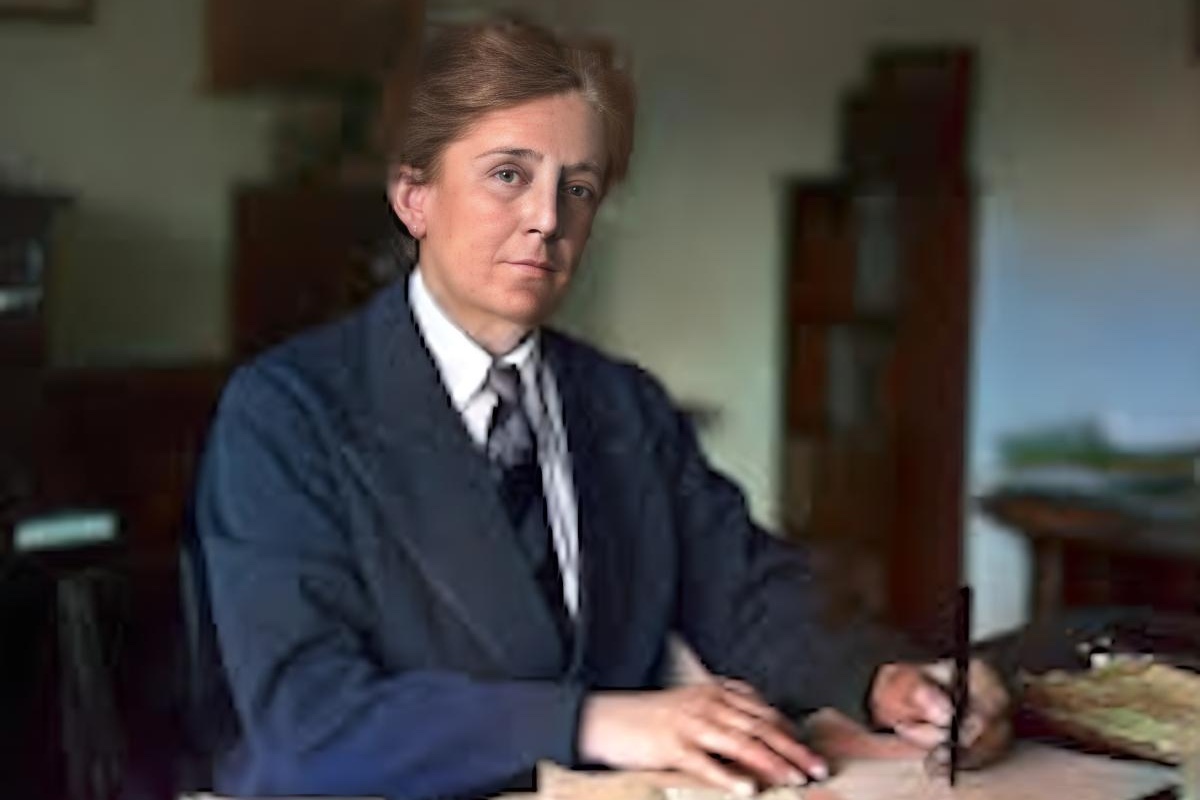
In the early decades of the 20th century, as women across Britain rallied for the right to vote, one extraordinary figure stood at the intersection of art, activism, and unapologetic rebellion: Dame Ethel Smyth. A composer of remarkable talent and a suffragette of fierce determination, Smyth used her music, her voice, and her sheer force of will to challenge a society that repeatedly told her “no.”
Born in 1858, Smyth grew up in a time when composing was seen strictly as a male profession. Undeterred, she fought her way into the Leipzig Conservatory and quickly made her mark. Over her career, she produced operas, orchestral works, chamber music, choral pieces, and songs—earning the admiration of giants like Tchaikovsky and Brahms.
But despite her talent, Smyth constantly faced institutional resistance. Critics dismissed her work simply because she was a woman. Rather than bowing to the pressure, she doubled down on her craft. Her opera The Wreckers is now widely regarded as one of the greatest British operas of its era, a brooding, powerful work that showcases her emotional and musical depth.
Smyth’s creativity didn’t stay in the concert hall. In 1910, she joined the Women’s Social and Political Union (WSPU)—Emmeline Pankhurst’s militant suffrage organisation—and became one of its most passionate supporters. She paused her composing for two full years to commit herself to the movement, marching, organising, and even engaging in acts of civil disobedience. As such rumours grew that Smyth and Pankhurst were more than just friends.
Her most iconic contribution was “The March of the Women”, the rousing anthem that became the musical heartbeat of the suffrage movement. It was sung in protests, in meetings, and even in prison cells.
In 1912, Smyth was imprisoned for her involvement in window-smashing protests—one of the WSPU’s bold tactics against government inaction. Legend has it that fellow suffragettes began singing The March of the Women in their exercise yard. When conductor Thomas Beecham visited, he found Smyth leaning out of her cell window, using a toothbrush as a conductor’s baton, vigorously directing the women below.
That moment has become emblematic of her spirit: creative, humorous, unstoppable.
Dame Ethel Smyth continued composing long after many had counted her out, even as she dealt with hearing loss. In 1922, she became the first female composer to be awarded a damehood, a recognition long overdue.
Today, her work is enjoying a deserved revival. Orchestras, opera companies, and choirs across the world are rediscovering the powerful voice she refused to silence—both musically and socially.
Ethel Smyth stands as a reminder that creativity is a force of resistance. She composed, she protested, she refused to shrink. And in doing so, she helped change the sound and shape of women’s history.